Used Car Inspection Checklist: What to Look For Before You Buy in Ontario


Buying used can be a smart move—especially if you know how to spot a great vehicle (and avoid the expensive surprises). Whether you’re shopping in Burlington, commuting to Oakville, or driving into Hamilton for work, this step-by-step used car inspection checklist will help you feel confident before you sign anything.
This guide is designed for Ontario shoppers and goes beyond the basics with a practical walk-around routine, test-drive plan, paperwork tips, and a printable checklist you can use on your phone.
Key Takeaways
Always start with the VIN, history, and open recall check before you fall in love with the vehicle.
A Safety Standards Certificate is required to plate a vehicle in Ontario and is valid for 36 calendar days from inspection.
For private sales in Ontario, the seller is legally required to provide a Used Vehicle Information Package (UVIP).
Ontario dealers must follow OMVIC all-in price advertising rules (price advertised must include fees the dealer intends to charge, except HST and licensing).
If anything feels “off,” book a pre-purchase inspection—it’s one of the best-value steps you can take.
Before You Arrive: 5-Minute Pre-Check (VIN, Recalls, Paperwork)
1) Ask for the VIN and run a recall check
A clean-looking vehicle can still have an open safety recall. Use the VIN to check recalls through Transport Canada’s recalls and defects resources. You can also use tools like CARFAX Canada’s recall check to confirm open recall status.
2) Confirm what paperwork should be available in Ontario
If you’re buying privately, Ontario rules matter:
The seller must provide a UVIP to the buyer for most private used vehicle sales.
A Safety Standards Certificate is what shows the vehicle meets minimum safety standards and is needed to plate/register in common transfer situations; it’s valid for 36 calendar days after inspection.
3) Put “all-in pricing” on your radar
When you’re shopping at a dealership in Ontario, OMVIC’s all-in price advertising rules mean the advertised price should include fees the dealer intends to charge—except HST and licensing. That’s helpful because it makes it easier to compare vehicles apples-to-apples.
Used Car Inspection Checklist (Ontario-Friendly Walkaround)
Bring: your phone flashlight, a paper towel, a $1 coin (tread check), and a friend if you can.
Step 1: Exterior and bodywork (2–3 minutes per side)
Look down the length of the vehicle like you’re sighting a straight line.
Panel gaps: uneven gaps between doors/hood/trunk can suggest prior collision repair.
Paint mismatch: look for differences in colour/texture between panels.
Rust hotspots (common in Ontario winters): wheel arches, rocker panels, door bottoms, around the trunk lip.
Glass and lights: check for cracks, heavy hazing, moisture inside housings.
Quick tip: Open and close each door. A door that “drops” or needs a hard slam can mean hinge wear or prior damage.
Step 2: Tires and wheels (the easiest place to catch hidden issues)
Tread depth: insert a $1 coin into the tread—if you can see most of the loon’s head, tread may be getting low.
Uneven wear (inside edge bald, outside ok) can indicate alignment or suspension issues.
Age: check the DOT date code on the sidewall (older tires may look “fine” but be hardened).
Match set: four different tire brands/models can hint at patchwork maintenance.
If you’re shopping for a used SUV, this matters even more because tires can be a bigger expense—especially on larger Jeep SUVs or performance-oriented Dodge vehicles.
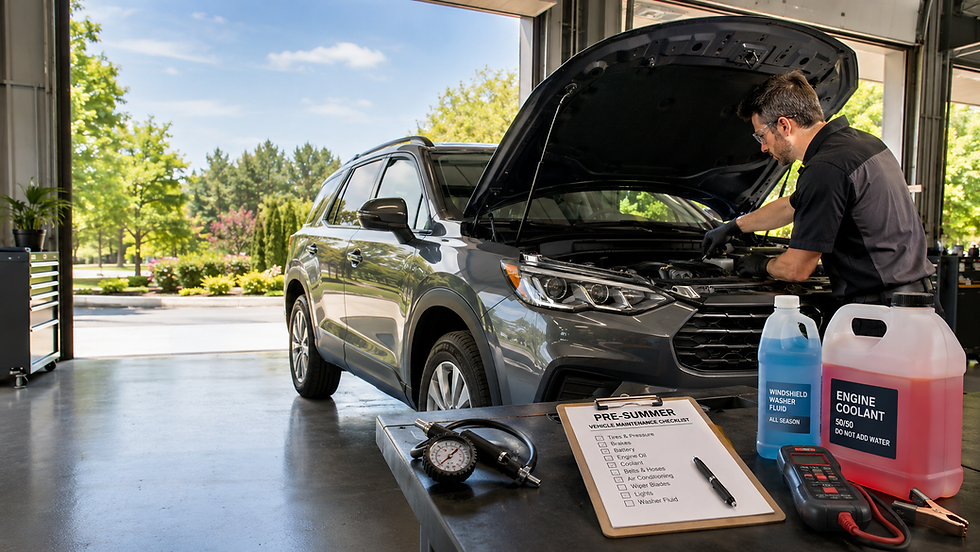
Step 3: Under the hood (don’t worry—this is simple)
With the engine off:
Oil: pull the dipstick—oil should be in range and not gritty.
Coolant: look for proper level and clean colour (never open a hot system).
Leaks: shine your flashlight around valve cover areas and under hoses.
Belts/hoses: cracks, fraying, or swollen hoses can signal overdue maintenance.
Battery: heavy corrosion on terminals can mean electrical headaches later.
Red flag: A very freshly cleaned engine bay can be fine—but it can also hide leaks. Pair it with a careful test drive and a look underneath.
Step 4: Interior, electronics, and warning lights (the “annoyance” test)
Turn the key to ON (without starting) and check:
Do warning lights illuminate briefly (they should), then go out after start?
Test HVAC (heat + A/C), power windows, mirrors, locks, seat heaters, infotainment, backup camera, and wipers.
Smell check: musty odours may suggest water intrusion.
If this is going to be a family vehicle for school runs across Milton and Halton Hills, interior functions aren’t “nice to have”—they’re everyday quality-of-life.
Step 5: Underbody and exhaust (the rust reality check)
If you can safely look underneath:
Check for heavy flaking rust, fresh undercoating patches, or wet spots.
Look at the exhaust: excessive rust holes, dangling hangers, or loud leaks are common bargaining points.
The Test Drive Checklist (Do This Route, Every Time)
A good test drive isn’t “a quick lap around the block.” Aim for 15–25 minutes:
1) Parking lot (low speed)
Full-lock turns left/right: listen for clicking or binding.
Hard-ish brake at low speed: any grinding, pulsation, or pull?
2) City roads
Does it track straight or drift?
Any clunks over bumps (suspension)?
Does the transmission shift smoothly?
3) Highway (if possible)
Steering wheel vibration at 90–110 km/h can indicate wheel balance or tire issues.
Listen for wind noise (door seals) and droning (wheel bearings).
4) Final check after the drive
Park, let it idle, then look underneath again for fresh drips.
Ontario Paperwork Checklist: What You Should Verify
Safety Standards Certificate (SSC)
A Safety Standards Certificate shows a vehicle meets minimum safety standards, and in Ontario it’s valid for 36 calendar days after the inspection date. It’s important to remember it’s a minimum standard snapshot, not a long-term guarantee.
UVIP for private sales
Ontario requires the seller to provide a Used Vehicle Information Package (UVIP) to the buyer for most private sales. The UVIP can help you confirm vehicle details and protect against surprises.
All-in pricing (dealership purchases)
OMVIC explains that advertised dealer pricing must include all fees the dealer intends to collect, with the exception of HST and licensing. If you’re comparing options, this rule makes it easier to shop confidently.
Printable Used Car Inspection Checklist (Copy/Paste)
Before you go
Get VIN and run a recall check (Transport Canada resources)
Ask for vehicle history documents and service records
If private sale: confirm UVIP will be provided
Exterior
Panel gaps consistent
No mismatched paint / overspray
Minimal rust (wheel arches, rockers, door bottoms)
Glass and lights intact
Tires/Wheels
Even tread wear
Adequate tread depth
Tires match (brand/model)
No cracks/bulges
Under hood
Oil level ok, no metal flakes
No obvious leaks
Hoses/belts not cracked
Battery terminals not heavily corroded
Interior
No persistent warning lights
HVAC works (heat + A/C)
Windows/locks/mirrors work
Infotainment + camera work
Test drive
Smooth start and idle
Brakes don’t grind/pulse/pull
Smooth shifting
No steering vibration at highway speed
No clunks over bumps
After drive
Look for fresh leaks
Smell for burning oil/coolant
When to Get a Pre-Purchase Inspection (PPI)
If you notice any of the following, it’s PPI time:
Uneven tire wear + steering pull
New undercoating only in certain areas
Warning lights, even intermittent
Transmission hesitation or harsh shifts
You’re buying a higher-mileage vehicle, or one you plan to keep for years
A professional inspection can turn “I think it’s fine” into “I know what I’m buying.”
Finding the Right Used Vehicle for Your Lifestyle in Halton and Beyond
A checklist helps you avoid bad buys—but choosing the right vehicle is about fit:
Growing family / car seats / winter traction: consider a used SUV like a Jeep.
Work and towing needs: a used Ram truck can be a strong match depending on your payload and trailer requirements.
Daily commuting + comfort: a used Chrysler may suit longer drives across the GTA West.
Sporty feel and versatility: a used Dodge can check a lot of boxes.
If you’re browsing options, you can start with our vehicle inventory to compare body styles, mileage, and features in one place.
Conclusion: Use the Checklist, Then Buy With Confidence
A used car inspection checklist isn’t about being “picky”—it’s about protecting your budget, your time, and your safety. Start with the VIN and recall check, follow a consistent walk-around routine, do a real test drive, and make sure Ontario paperwork lines up (UVIP for private sales, and understanding how Safety Standards Certificates work).
When you’re ready to take the next step, explore our inventory and, if you want to plan payments ahead of time, visit our finance centre to review your options (OAC).
FAQ: Used Car Inspection in Ontario
Do I need a Safety Standards Certificate to buy a used car in Ontario?
To register/plate a vehicle in typical ownership transfer situations, you’ll need a Safety Standards Certificate, and it’s valid for 36 calendar days after inspection.
What is a UVIP and when do I need it?
In Ontario, private sellers are legally required to provide a Used Vehicle Information Package (UVIP) to the buyer for most used vehicle sales.
How do I check for open recalls before buying?
Use the VIN to check recall information through Transport Canada’s recalls and defects resources, and consider confirming via tools like CARFAX Canada’s recall check.
What does “all-in pricing” mean in Ontario?
OMVIC explains that dealer advertised pricing must include the fees the dealer intends to collect, except HST and licensing.
Should I still get a pre-purchase inspection if everything looks good?
Yes—especially for higher-mileage vehicles or anything with minor red flags. A PPI is often the most cost-effective peace of mind you can buy.
--------------------------------------------------------------------------------------------------------------------------
With over four decades in the automotive industry, Dealer Principal Rick Paletta is a trusted name across the Hamilton–Burlington region. Born and raised locally, Rick is respected for his integrity, work ethic, and people-first leadership—and he still loves this business because it’s about helping neighbours, building relationships, and matching people with vehicles they’re excited to drive. His commitment to the community shows up in consistent giving, including long-running support of McMaster Children’s Hospital through Car Nation Cares.

Comments